$99 Emergency Exam (Includes X-rays & Diagnosis)
You just booked your dental implant appointment, or perhaps you’re still pondering. In such a case, one of the first questions people have is: “How long does recovery take, really? It’s a fair question. You have a job, a family, and life to return to. The recovery process isn’t as daunting as it seems, but knowing what’s ahead helps you plan better and feel more confident going in.
This blog answers common questions and breaks down the important phases of recovery. By the end, you’ll have a better sense of what’s involved and how you can help your recovery for the best possible outcome.
What Happens Right After Surgery
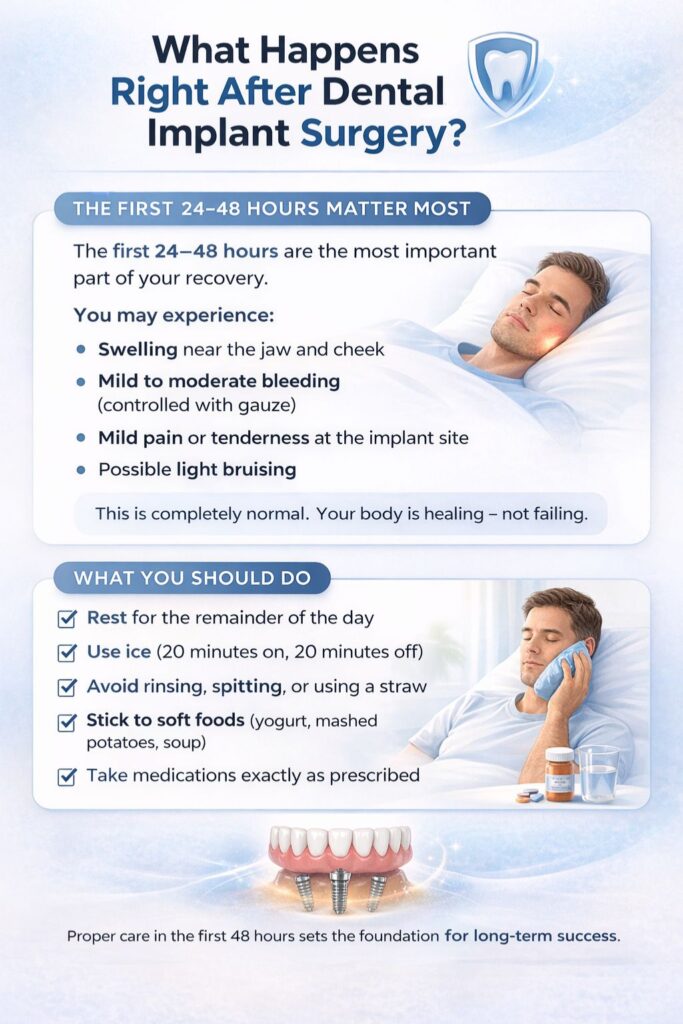
The first 24–48 hours matter more than any other time in the entire recovery.
Immediately after the procedure, you might experience:
- Swelling near the jaw and cheek area
- Bleeding that was mild to moderate (controlled with gauze)
- Mild pain or tenderness at the implant site
- Possible bruising on the skin
This is all completely normal. Your body is responding to the surgical procedure, not anything going wrong.
What you should do:
- Rest for the remainder of the day
- Use Ice (20 minutes on, 20 minutes off) to control swelling
- Don’t rinse, spit, or use a straw that can dislodge the clot
- Avoid hard and crunchy foods, and instead stick to yogurt, mashed potatoes, and soup
- If you’ve been given medications, take them as prescribed
The First Two Weeks
Getting your dental implant in Rockaway, NJ, from a team means you’re working with a team familiar with the local community and your day-to-day lifestyle — whether you’re commuting to work or keeping up with family routines in and around Morris County.
During the first week, most patients notice a significant reduction in swelling and discomfort by days 3–5. By the end of week two, most people feel close to normal and can return to regular daily activities.
Here’s a general week-by-week breakdown:
Week 1:
- Swelling is usually at its peak around day 2–3, before gradually going down
- Eat soft foods only
- No strenuous exercise
- After 24 hours, cleanse the area with mild saltwater solutions
Week 2:
- Discomfort significantly reduces
- Then you can gradually add in soft foods
- Continue to avoid hard, crunchy, or chewy foods
- Attend any follow-up appointment your dentist has made
Most patients are back to work within 2–3 days if their job isn’t physically demanding.
Osseointegration: The Longer Phase of Healing
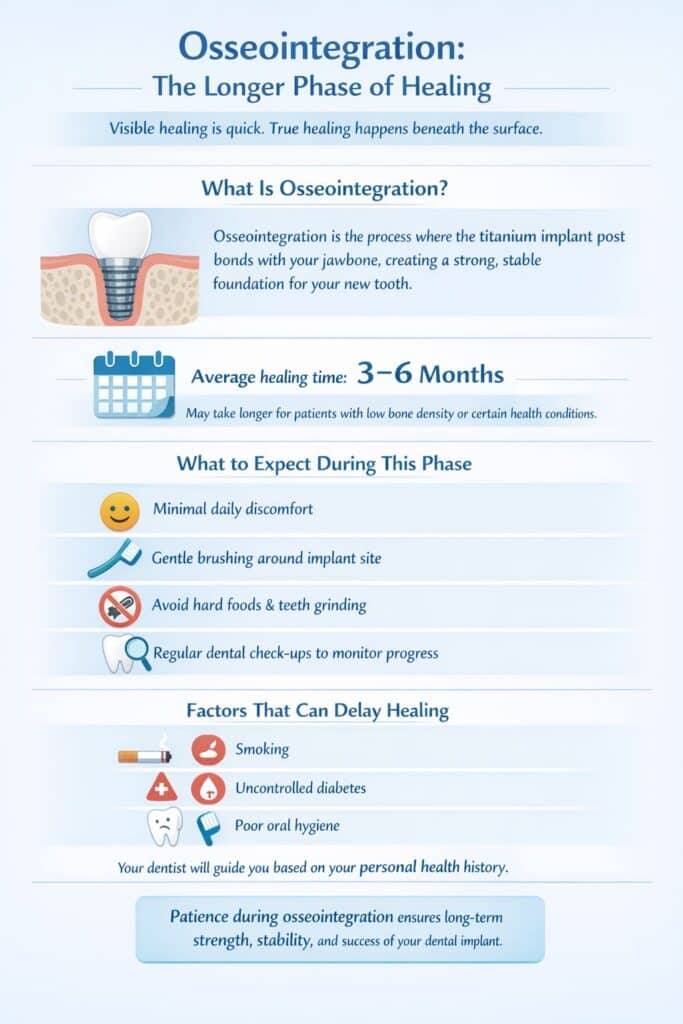
What most people don’t know is that visible healing happens quickly, but real healing takes time beneath the surface.
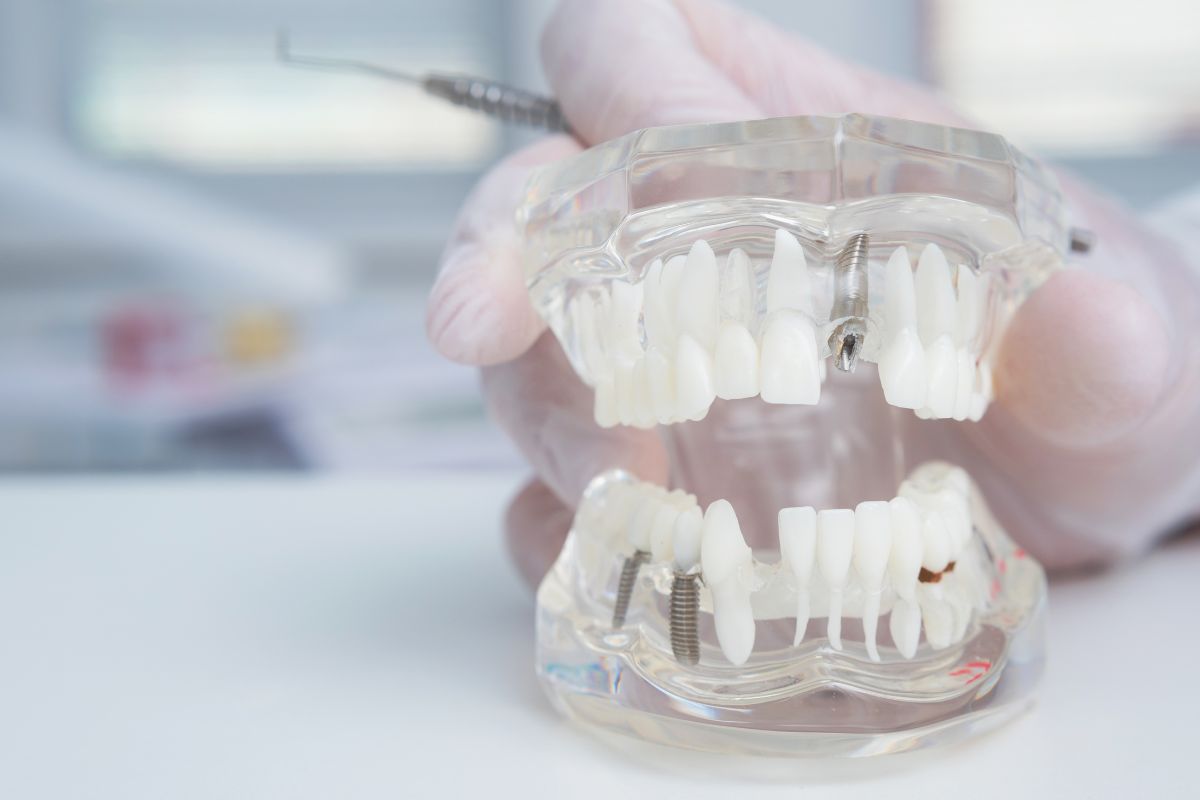
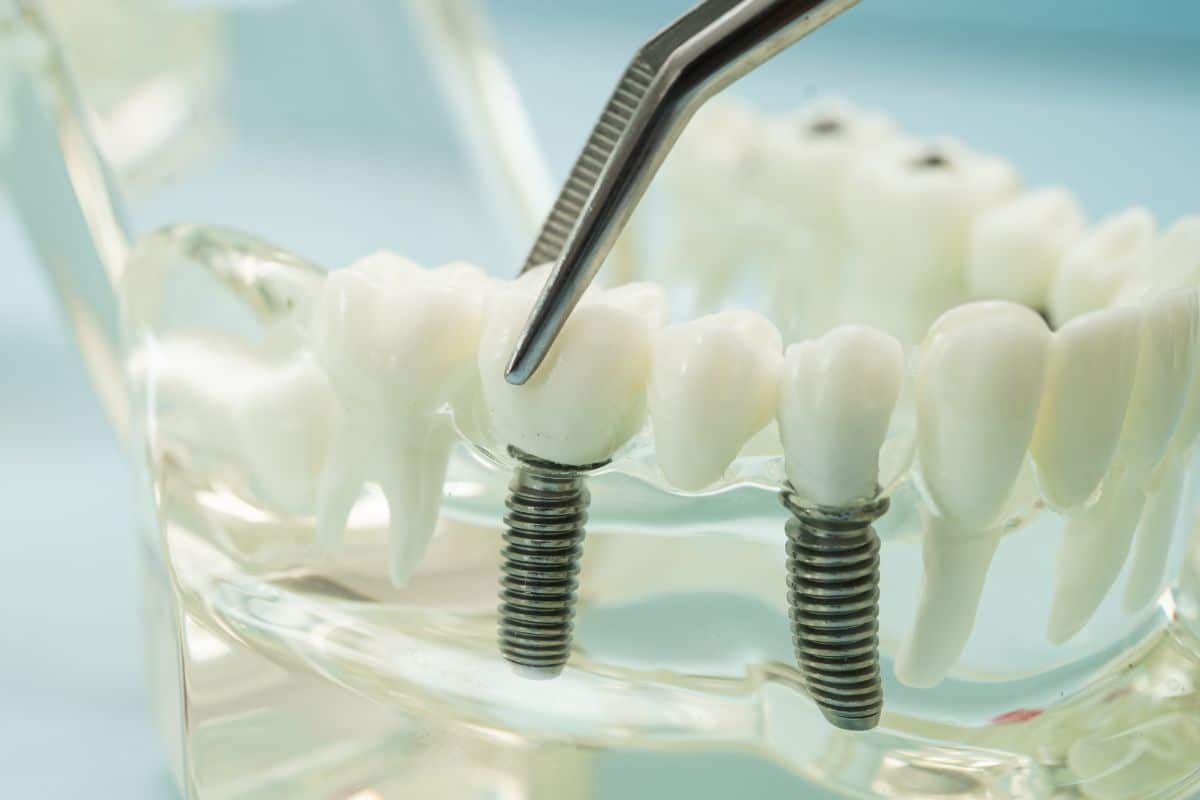
Osseointegration is the stage in which your titanium implant post bonds with your jawbone. This is what makes implants so stable and durable. This takes 3 to 6 months on average (longer if the patient has low bone density or is not in good health).
During this time:
- You don’t really feel uncomfortable on a daily basis.
- Oral hygiene remains normal, where gentle brushing around the teeth implant site is encouraged
- Habits that can also damage teeth, such as hard foods and grinding habits, should still be avoided
- Regular check-ins with your dentist help track progress
Factors that can delay this process include smoking, uncontrolled diabetes, or poor oral hygiene. Your dentist will provide you with guidance based on your health history.
Getting the Crown (Final Restoration)
Next, once osseointegration is complete, the final crown, the visible portion of a tooth, is placed. The process is simple and requires only one or two brief appointments.
After crown placement:
- There may be slight sensitivity for a few days
- Bite adjustments are common and easily done
- The crown is designed to match your surrounding teeth in shape and shade
At this point, the dental implant in Rockaway, NJ, functions exactly like a natural tooth. With good care, implants can last 15 to 25 years or longer.
Tips to Speed Up Recovery
You can’t rush biology, but you can support it.
- Don’t smoke. The risk of implant failure and delayed bone healing increases significantly with smoking.
- Drink plenty of water and eat healthy foods. Your body needs resources to heal itself.
- Follow all post-op instructions you receive from your dental team.
- Go to follow-up visits; they are not optional. They’re how your dentist tracks healing.
- Avoid blood thinners, such as aspirin, unless your dentist prescribes them. Check with your dentist first.
When to Call Your Dentist
Most recovery is uneventful, but certain signs should prompt a call:
- Deteriorating pain (if it’s getting worse after day three instead of better)
- Heavy, persistent bleeding after the first day
- Swelling that gets worse after day 3
- Chills or unusual discharge near the implant site
- The implant is becoming loose or position shifting
They might be the signs of infection or a condition known as peri-implantitis (inflammation around the implant). Early attention prevents larger problems.
Your Recovery Is Personal
Every patient breaks the same way, but heals differently. Other factors include age, bone quality, overall health, and compliance with post-op directions. The above timeline is a general guide; your own experience may vary slightly.
The most important thing is to maintain close, ongoing communication with your dental provider at every step.
Ready to Take the Next Step? Rockaway Dental Center is Here For You
If you’re considering a dental implant in Rockaway, NJ, or just starting your journey, Rockaway Dental Center is here to guide you through every step, from the initial consultation to final crown placement. Our team here is known and trusted by patients throughout Rockaway and the surrounding Morris County area for straightforward, comfortable care.
Contact Rockaway Dental Center today to book a consultation and discover a personalized recovery plan designed around your life.
Common Questions Most People Ask
1. How long does dental implant surgery take?
The surgery itself typically takes 1–2 hours per implant. The entire process, including osseointegration and crown placement, spans 3–9 months.
2. Is dental implant recovery painful?
Most patients describe the discomfort as mild to moderate, manageable with over-the-counter pain relievers or prescribed medication. It’s usually most noticeable in the first 3 days.
3. Can I go to work the next day after implant surgery?
Many patients return to desk jobs within 1–3 days. If your work involves physical labor, plan to take a few extra days off.
4. What foods can I eat after dental implant surgery?
Stick to soft foods for at least the first week: soups, smoothies (no straw), yogurt, eggs, and mashed vegetables.