$99 Emergency Exam (Includes X-rays & Diagnosis)
Choosing between Invisalign and braces as an adult is a big decision. You want straight teeth, but you also want a treatment that fits your lifestyle. When comparing Invisalign vs. braces for adults in Rockaway, the answer depends on your priorities, bite issues, and daily habits. Dr. Ted Cho at Rockaway Dental Center helps patients make this choice every day.
This guide breaks down both options honestly. We will look at comfort, appearance, compliance, cost, and what each treatment can — and cannot — fix. By the end, you should have a clear picture of which path makes sense for you.
Comfort and Convenience: How Invisalign vs. Braces Compare for Adults in Rockaway
Traditional metal braces use brackets and wires attached to your teeth. Those wires can poke and scratch the inside of your mouth. Soreness after adjustments is very common. Most adults find the discomfort manageable, but it is a real consideration.
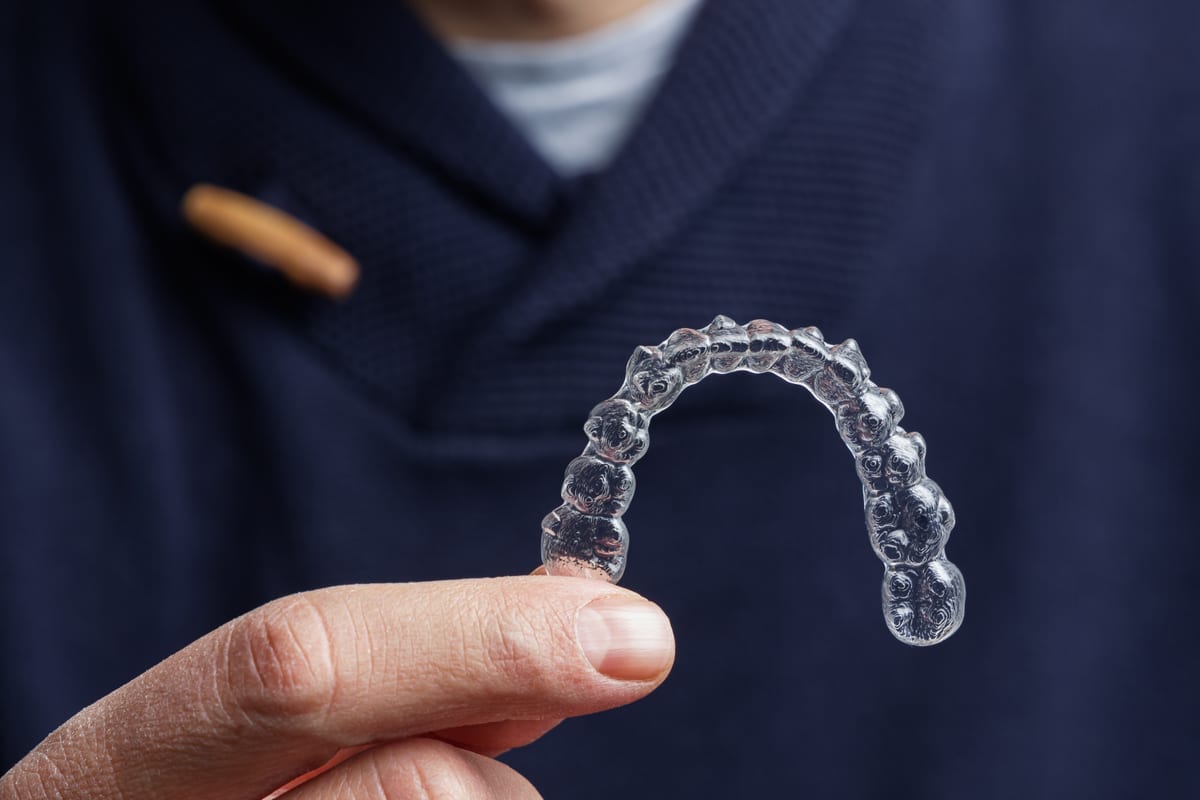
Invisalign uses a series of clear, removable plastic aligners. They are custom-fitted to your teeth and switched out every one to two weeks. Most patients experience mild pressure when they start a new tray. There are no sharp edges and no emergency wire repairs needed.
Eating is much simpler with Invisalign. You remove the aligners before meals and eat whatever you like. With braces, you must avoid hard, sticky, and chewy foods throughout treatment. For busy adults in Rockaway, that food freedom is often a major deciding factor.
- Invisalign aligners are smooth and comfortable against soft tissue
- Braces require wax to cover sharp brackets or wires
- Invisalign allows normal eating without food restrictions
- Braces need careful cleaning around brackets and wires
- Invisalign trays are removed for brushing and flossing
Appearance and Discretion: Which Option Is Less Noticeable?
Many adults choose orthodontic treatment but worry about how it will look at work or social events. This is one area where Invisalign has a clear advantage. The aligners are nearly invisible when worn. Most people will not notice them unless they look very closely.
Metal braces are visible and immediately recognizable. Ceramic braces are a middle ground — they use tooth-colored brackets, but the wire still shows. Clear lingual braces attach to the back of teeth, but they can affect speech and are harder to clean.
If discretion matters most to you, Invisalign wins this category comfortably. For professionals, public speakers, or anyone who values a subtle approach, that matters. Dr. Ted Cho can show you examples and let you see exactly how aligners look in person.
Compliance, Treatment Scope, and What Each Option Can Fix
Invisalign works best when you wear your aligners for 20 to 22 hours per day. Skipping wear time stalls progress and extends treatment. This requires discipline and a genuine commitment to your treatment plan. Adults who are motivated tend to do very well with Invisalign.
Braces are fixed to your teeth, so compliance is not a factor. They work around the clock without any effort from you. For patients who might struggle to remember to wear aligners, braces can actually produce more reliable results.
Treatment scope is another important distinction. Invisalign handles mild to moderate crowding, spacing issues, and many bite problems very effectively. However, severe malocclusion, significant overbites, or complex bite corrections may still require traditional braces. Dr. Cho evaluates each patient individually to determine which treatment can achieve the outcome you want.
- Invisalign is ideal for mild to moderate crowding and spacing
- Braces handle complex bite corrections more effectively
- Invisalign requires 20–22 hours of daily wear for best results
- Braces work continuously without patient compliance effort
- Both options can produce excellent results for the right candidate
Cost, Timeline, and the Value of Each Option in Rockaway
Cost is often the first question adults ask. Invisalign and braces have similar price ranges overall, though exact costs vary by case complexity. Simpler cases with Invisalign may cost less than comprehensive braces treatment. More complex Invisalign cases can cost the same or slightly more.
Treatment timelines are also comparable. Most adult cases with either option take 12 to 24 months. Invisalign sometimes produces faster results for mild cases. Braces may be faster for more complex tooth movements.
Think about the full value beyond the sticker price. Invisalign offers comfort, discretion, and convenience. Braces offer reliability without compliance demands. Both are long-term investments in your smile, your confidence, and your oral health. Dr. Cho’s team will give you a clear cost estimate after your initial consultation.
How Rockaway Dental Center Approaches Your Smile Goals
At Rockaway Dental Center, Dr. Ted Cho takes a whole-mouth approach to treatment planning. Straightening your teeth is about more than aesthetics. Properly aligned teeth are easier to clean, put less stress on your jaw, and support better long-term oral health.
Whether you choose Invisalign or braces, your treatment connects with your overall dental care. Patients interested in Cosmetic Dentistry Rockaway services can also explore complementary treatments like teeth whitening or veneers after orthodontic treatment is complete. Straightening and brightening your smile often go hand in hand.
Unexpected dental issues can also arise during any orthodontic treatment. Our team is here for you if something comes up, including access to Emergency Dentistry Rockaway care when you need it. You are never on your own during your treatment journey.
Dr. Cho reviews your X-rays, bite, and tooth positioning before recommending any treatment. He will explain exactly what each option can achieve in your specific case. There are no one-size-fits-all recommendations at our practice.
Conclusion: Making the Right Choice for Your Smile
The best choice between Invisalign and braces depends entirely on your individual situation. Invisalign offers outstanding comfort, discretion, and flexibility for motivated adults. Braces provide reliable, fixed correction for complex cases. Both are proven, effective treatments when matched to the right patient.
Adults in Rockaway, NJ now have excellent options available close to home. Dr. Ted Cho and the team at Rockaway Dental Center are ready to help you figure out which path fits your life, your smile goals, and your expectations. A consultation is the best first step. Book Now to schedule your appointment with our team.
Frequently Asked Questions
Is Invisalign as effective as braces for adults?
For mild to moderate alignment issues, Invisalign is just as effective as braces. For more complex bite problems or severe crowding, braces may provide better control over tooth movement. Dr. Cho evaluates each case individually to recommend the most effective option.
How long does Invisalign treatment take for adults?
Most adult Invisalign cases take between 12 and 18 months, though complex cases can take up to 24 months. Your treatment timeline depends on the severity of your alignment issues and how consistently you wear your aligners each day.
Can adults get braces, or is Invisalign the better choice for grown-ups?
Adults can absolutely get traditional braces, and they remain an excellent option for complex cases. Many adults prefer Invisalign for its discreet appearance and removability, but the best choice depends on your specific dental needs and lifestyle.
Does Invisalign hurt more or less than braces?
Most patients find Invisalign more comfortable overall. There are no brackets or wires to irritate soft tissue. New aligners can cause mild pressure for a day or two, but this is generally less intense than the soreness that follows braces adjustments.
What happens after Invisalign or braces treatment is finished?
After either treatment, you will wear a retainer to keep your teeth in their new positions. Retainer wear is typically nightly long-term. Skipping retainer use can allow teeth to gradually shift back, so this step is an important part of maintaining your results.